




Slots, Poker, and the Real Math Behind iGaming Wins
iGaming | 19 November 2026
Most people who lose money in online casinos do not lose because they are unlucky. They lose because nobody ever explained how the games actually make money. That is not a moral failure or a character flaw. It is a knowledge gap, and it is the single most expensive gap in the entire iGaming world.
So let's close it. I have spent years watching players chase jackpots, bluff into calling stations, and bet parlays that bookmakers pray for. Here is what the math, the mechanics, and the psychology of iGaming look like once you strip away the flashing lights.
Why the House Always Wins (And By How Much)
Every game in a casino, land-based or online, is built on a simple concept called house edge. It is the mathematical advantage the operator holds on every bet you place. It is not a conspiracy. It is arithmetic.
- Blackjack (basic strategy, decent rules): 0.5% edge — one of the friendliest games in the building
- Baccarat (banker bet): about 1.06% edge
- European roulette: 2.7% edge
- American roulette: 5.26% edge (that extra double-zero pocket costs you double)
- Slots: typically 2% to 10%, often higher
Notice the pattern. The games with the least skill involved tend to have the worst odds. That is not a coincidence. Slot machines have no strategy to learn, so the operator compensates by keeping a bigger slice of every dollar cycling through. Roulette with one zero is nearly half as generous as the American version — a detail you can act on tonight by choosing the right table. See สล็อตเว็บตรง for a side-by-side comparison.
Slots: It Is All About RTP and Volatility
Two numbers decide whether a slot is worth your time: Return to Player (RTP) and volatility.
RTP is the theoretical percentage of all wagered money that gets paid back over millions of spins. A slot with 96% RTP returns 96 cents per dollar on average, and the casino keeps 4 cents. Here is the trap: that number only reveals itself over an enormous sample. You can play 500 spins on a 96% slot and lose 60% of your bankroll. The slot does not owe you anything.
Volatility is a separate axis entirely. Low-volatility slots pay small amounts frequently. High-volatility slots — the ones with those 10,000x max wins splashed across the loading screen — mostly pay nothing and occasionally pay enormous. Neither is better. They suit different bankrolls. If you have 100 units to play with, a high-volatility slot will eat you alive before the big hit arrives. If you have 1,000 units, low volatility just bores you to death.
Practical tip: check the RTP in the game's paytable or the operator's game info section. Anything under 95% is a decision you should make consciously.
Poker Is the One Game You Can Actually Beat
This is where iGaming gets interesting, because poker is not played against the house. It is played against other people, and the house simply takes a rake — a cut of each pot.
That changes everything. In every other game, the math is fixed against you. In poker, the math is fixed against someone at the table. Your job is to figure out who.
Three foundations matter more than any fancy bluff:
- Position — acting last gives you information. It is the single most underrated edge in poker.
- Pot odds — if you must call 20 to win 100, you need roughly 17% equity to break even. If your draw gives you more, call.
- Bankroll management — 20 buy-ins minimum for cash games. If you sit with 30% of your bankroll at one table, one bad beat ends your month.
Beginners lose because they play too many hands. Winning players fold. A lot. If you are seeing more than 25% of flops in a full-ring cash game, you are bleeding chips.
Sports Betting: The Hidden Tax on Every Wager
Sports betting feels different because you are supposedly applying knowledge — team form, injuries, weather, momentum. And you can absolutely have an edge. But the vig, also called the juice or the margin, makes profitability brutally hard.
A standard -110 line means you risk $110 to win $100. That built-in margin gives the book roughly a 4.5% edge on a coin-flip outcome. To be a long-term winning bettor, you need to hit around 52.4% of your picks just to break even. Most sharp professionals grind out 54% to 56%. That is the whole margin of victory.
This is why parlay bets are so profitable for the operator. Each leg carries its own margin, and those margins stack. A five-leg parlay at -110 each collapses your implied probability into something tiny, with a payout that considerably understates the true risk. They are fun. They are entertainment. They are not a strategy.
The Psychology Trap Nobody Admits
Casinos have spent a century engineering environments to keep you playing. Online platforms do it with push notifications, autoplay buttons, and near-miss animations designed to trigger the same dopamine response as a win.
Two concepts are worth memorising:
- Loss chasing — increasing bets after a loss to recover it. It is the single fastest way to zero.
- Sunk cost fallacy — continuing because you have already lost so much. That money is gone. It is not an investment.
Set a hard stop-loss before you log in. When you hit it, you leave. No exceptions, no "one more spin." The players who survive are not the smartest ones. They are the disciplined ones.
Final Thought: Treat iGaming Like a Paid Hobby
If you walk into iGaming expecting to beat the casino, you have already lost the plot. Slot machines and roulette are entertainment products with a built-in fee, just like a concert ticket or a round of golf. Pay the fee, enjoy the experience, walk away.
The exceptions are poker and sharp sports betting, where real skill can flip the math in your favour — but only for a small percentage of players willing to study, track results, and stay disciplined over thousands of hands and wagers. Everyone else should size their bets so a loss means nothing more than a slightly less luxurious evening.
Learn the RTP. Respect the house edge. Exploit position at the poker table. Never chase. That is the entire game, and it took me years to see it clearly.
-

-
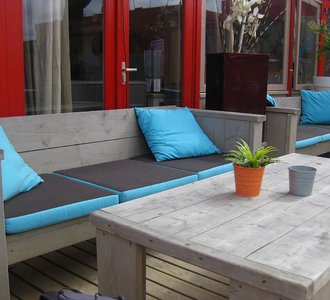
Bench Placement: Where You Put It Matters More Than What You Buy
Sep 28, 2026Materials & Buying Guides

-


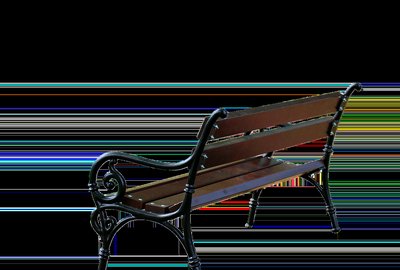
Brookside Bench

You don't need a garden to have a proper outdoor seat — you need the right footprint and a bit of planning.